How to Choose a Dandruff Shampoo That Doesn’t Dry Out Your Hair? 5 Important Criteria
-
 Youssef diab
 - Posted on
- 0 comments

One of the most common complaints we hear about medicated dandruff shampoos is: “It does get rid of dandruff, but my hair has become noticeably rough and dry.” This problem is real and has a clear scientific basis. Understanding this will help you choose a product that addresses dandruff without compromising your hair’s health.
Why Do Medicated Dandruff Shampoos Sometimes Dry Out Hair?
Some strong active ingredients used in dandruff treatment (like high concentrations of selenium sulfide or ketoconazole) are very effective at eliminating excess fungi, but they can also strip away the natural oils that the scalp and hair need. The result: less dandruff, but rougher and drier hair, especially with repeated use.
This leaves many people in a dilemma: continue using the shampoo and endure the dryness, or stop using it and risk the dandruff returning. The real solution isn’t choosing between the two, but rather choosing a balanced product from the start. 5 Criteria to Help You Choose an Effective and Safe Dandruff Shampoo
- Contains known and proven antifungal ingredients
Zinc pyrithione, piroctone olamine, or tea tree oil—ingredients with a clear scientific track record of combating the fungi responsible for dandruff, without the need for very harsh concentrations. - Sulfate-free
Strong sulfates (like SLS) cleanse deeply but quickly strip away natural oils. Sulfate-free shampoos cleanse more gently, which is important if you have a sensitive scalp or dry hair. - Contains actual moisturizing ingredients
Panthenol, olive oil, or aloe vera are key ingredients that protect the hair and scalp from the dryness caused by antifungal treatment. - Multi-target formula, not just one ingredient
Shampoos based on a single active ingredient focus on only one aspect of the problem (fungi, for example) and leave other aspects (moisturization, sebum regulation) unaddressed. Integrated formulas, which combine multiple active ingredients with protective components, provide a more balanced result. - Noticeable results in a reasonable timeframe, not just temporary relief. Any shampoo can remove visible flakes after the first use. The real question is: Do these results last after a week or two of regular use, or does the dandruff return once you stop?
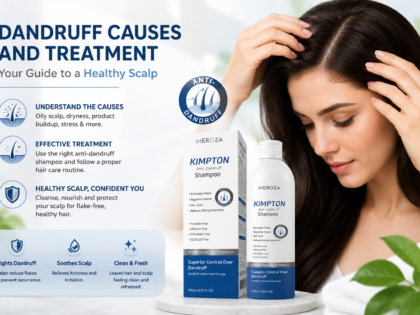
Examples of this type of formula: Kimpton shampoo is an example of a product designed according to this logic. Its formula combines antifungal agents (zinc pyrithione, piroctone olamine, and tea tree oil) and sebum-regulating ingredients (aloe vera and jojoba oil), in addition to moisturizing ingredients (panthenol and olive oil) that aim to protect hair from dryness with regular use. It is also free of harsh sulfates.
In conclusion, choosing the right dandruff shampoo doesn’t have to be a choice between “powerful effectiveness” and “healthy hair.” These five criteria help you quickly evaluate any product before buying and find one that strikes the right balance.